
10th Judicial District · Seat 38 · Minnesota
Judicial Platform
why I'm running, and the kind of judge I would strive to be.
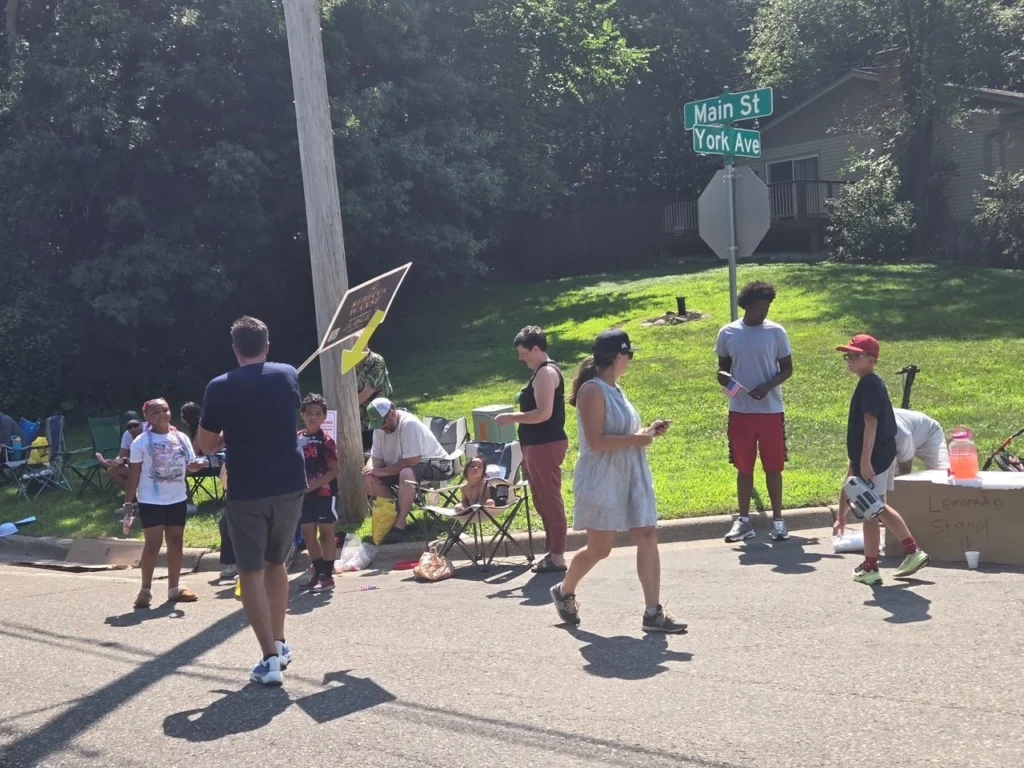
Since launching my campaign in early June, I have attended well over a dozen community events and parades across all eight counties of Minnesota’s Tenth Judicial District. Along the way, I have had the opportunity to meet thousands of people. Some of those interactions have been brief – a handshake, a wave, or a quick conversation along a parade route – but I have also had the privilege of having thoughtful, in-depth conversations with hundreds of voters throughout the district.
One thing has become clear through those conversations: people have many of the same questions about who I am, why I am running for judge, what experience I would bring to the bench, and how I would approach the responsibility of serving as a district court judge.
I think those are important questions – and voters deserve thoughtful answers.
Over the coming weeks, I plan to use this forum to answer some of the questions I hear most often on the campaign trail. My hope is that these posts will give you a better understanding of who I am, the experience I would bring to the bench, and the kind of judge I would strive to be.
Most importantly, I hope they help you make an informed decision when you vote this November.
Thank you to everyone who has taken the time to talk with me, ask questions, share your experiences, or simply say hello along the way. I hope to earn your vote for Tenth Judicial District Judge this November.
The Answers I Cannot Give
Let’s get this out of the way right now: judicial candidates operate under far more restrictions than most political candidates.
That is intentional.
Judicial candidates in Minnesota are governed by the Minnesota Code of Judicial Conduct – the same Code that governs sitting judges. Those rules exist to protect the independence and impartiality of our courts and to maintain public confidence in the judiciary.
As a judicial candidate, I cannot campaign like someone running for the Legislature, or Governor, or most other political offices. Judicial races in Minnesota are nonpartisan. I cannot campaign as the candidate of a political party, endorse candidates for other public offices, or make promises or commitments about issues or cases that could come before me as a judge.
That makes a judicial campaign very different from the political campaigns most people are accustomed to seeing. You won’t see a “D” or an “R” next to my name on the ballot. And while candidates for other offices routinely campaign by announcing their positions on controversial issues and criticizing their opponents for taking the opposite position, a judge’s job is fundamentally different.
A judge is not elected to advance a political agenda. A judge is elected to apply the law fairly and impartially to the people who come before the court.
While those restrictions can sometimes be frustrating for voters who understandably want to know more about the candidates, I hope the civility they impose also offers a bit of a breath of fresh air.
So, with that explanation out of the way, let’s talk about two of the questions I hear most often and cannot answer in the way people sometimes expect.
1. What political party are you? Are you liberal or conservative?
I cannot answer either question. But when it comes to choosing a judge, I think those questions are far less important than many voters realize.
I have been practicing law for 20 years. During that time, I have appeared before hundreds of judges across Minnesota and litigated thousands of motions, hearings, and trials. And I can tell you this: win or lose, when a judge was doing the job correctly, I did not walk out of the courtroom knowing or even having an inkling whether that judge was a Democrat or a Republican, liberal or conservative.
That is how it should be.
During this campaign, I have met with people and organizations from across the political spectrum. I have received support and endorsements from both liberals and conservatives. If I am elected, liberals and conservatives will both appear before me. So will people who have no political affiliation at all.
The law applies equally to all of them.
My responsibility will not be to determine whether I agree with the people who appear before me. My responsibility will be to listen, apply the law faithfully, and treat every person who enters my courtroom with fairness, dignity, and respect.
Everyone should be able to leave my courtroom knowing they were heard and treated fairly – even when they disagree with my decision.
That is the kind of judge I will strive to be.
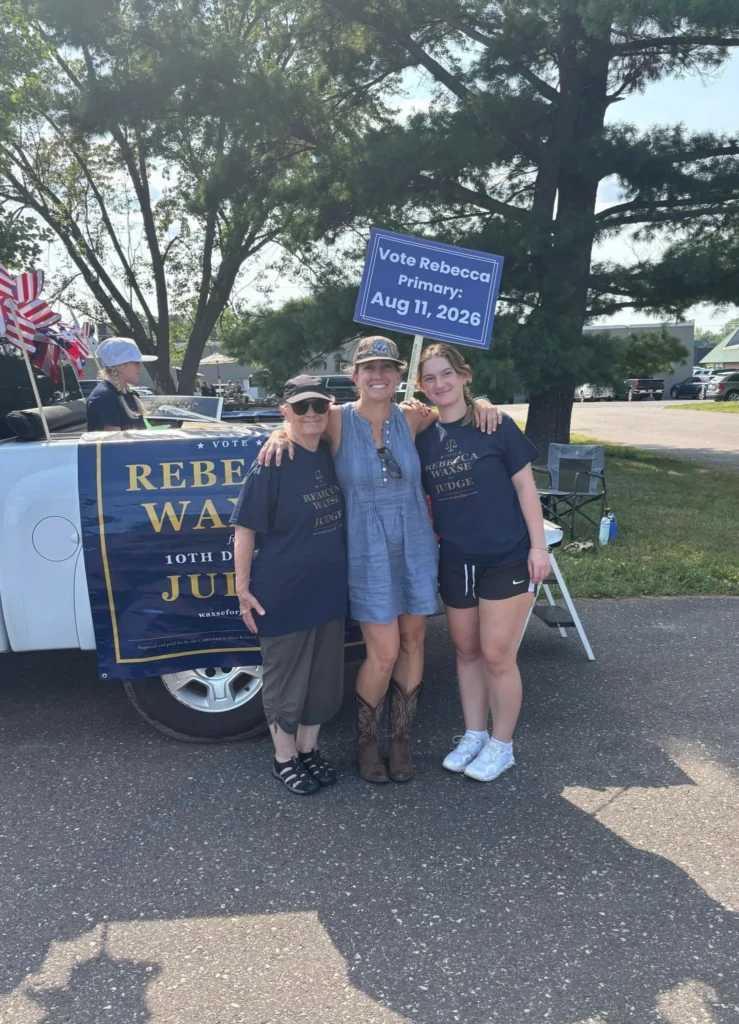
“Impartiality. Fairness. Respect for the law. Those principles – not my personal political beliefs – will guide me if I have the privilege of serving as a judge.”

2. What are your views on issues such as Flock cameras, fraud investigations, ICE, abortion rights, the new MN flag, etc.?
Sorry, I can’t answer those questions in the way you might expect a candidate for another public office to answer them.
Judges are different from legislators, governors, or partisan politicians. Their job is not to make policy or campaign on how they believe controversial issues should be resolved. Their job is to decide the cases that come before them based on the facts and the law as it currently exists.
A sitting judge cannot promise how they would rule in a future case or make statements that would call into question their ability to fairly and impartially decide an issue that may come before them. That remains true even when a sitting judge is running for reelection.
Even though I am not a sitting judge, the same principle applies to judicial candidates like me.
Think about it from the perspective of someone walking into a courtroom. If your case involved a controversial legal issue, would you want to discover that the judge had already publicly announced during a campaign what they thought about that issue? Probably not. You would want a judge who listens to the evidence, considers the arguments of both sides, researches and applies the law, and then decides.
That is exactly what I would want if I were appearing before a judge, and it is what every person who appears before me should be able to expect.
So, while I understand why voters ask these questions, there are some questions I simply should not answer as a judicial candidate. And I believe that is a good thing.
My Experience And Judical Philosophy
1. What is your employment experience and how has it prepared you to be a judge?
Over the course of my career, I have handled a broad range of cases including juvenile law, child protection, criminal cases at every level—from traffic tickets to the most serious felonies – divorce and custody matters, Orders for Protection, Harassment Restraining Orders, and other matters that regularly come before the courts.
I also have specialized training in DNA evidence. In addition to handling DNA issues in my own cases, I consult with other attorneys on their DNA cases and have taught lawyers about DNA evidence on a statewide level.
My first job after law school brought me to the Tenth Judicial District as a public defender in Anoka and Isanti Counties, where I developed deep roots in those courthouses and legal communities. Washington County has been my home county for most of my career, but over the years I have appeared in courthouses throughout the Tenth Judicial District, across the Twin Cities, and in other parts of Minnesota.
After 20 years, I truly cannot count the number of bail hearings, motions, court trials, jury trials, and sentencing arguments I have handled. I have represented thousands of people and spent thousands of hours in Minnesota courtrooms. I know what it is like to stand next to someone on one of the most difficult days of their life. I know what it is like to make a difficult argument to a judge, to win, to lose, and to explain a court’s decision to a client who may not agree with it.
Those experiences have taught me something that I believe is just as important as knowing the law: it matters how a courtroom is run.
My career has also allowed me to develop strong professional relationships with judges, court staff, prosecutors, public defenders, private attorneys, and members of law enforcement throughout the Tenth Judicial District. I understand how our court system works, and I understand the important role each of those people plays in making it work well.
I also recognize that every new judge has a learning curve. No lawyer walks onto the bench knowing everything, and I certainly would not pretend otherwise. A good judge must be willing to learn, ask questions, listen to experienced court staff and colleagues, and continually work to become better at the job.
I am ready to do that work.

2. What is your judicial philosophy?
My judicial philosophy is grounded in fairness, integrity, and respect. A judge must know and faithfully apply the law, listen carefully, remain impartial, and treat every person who enters the courtroom with dignity.
My 20 years of experience have also taught me that how people are treated by the court matters. Even when someone disagrees with the outcome, they should leave the courtroom knowing they were heard, treated fairly and respectfully, and that the judge’s decision was based on the facts and the law.
That is the kind of judge I will strive to be.
3. Why do you want to be a judge?
After twenty years of practicing law, I am ready to serve my community in a different role. I have spent my career representing people during some of the most difficult and consequential moments of their lives, and I have seen firsthand the impact a judge can have – not only through the decisions they make, but through how they treat the people who come before them.
I want to bring my experience, judgment, and perspective to the bench and serve the community that has been my professional and personal home for most of my career. I believe I can make a meaningful difference as a judge, and I am ready for the responsibility that comes with that role.
Why am I The Best Candidate On Your Ballot
When people step into the voting booth in November, this is ultimately the most important question for them to decide. I am happy to address it directly.
My opponent and I have different professional backgrounds and have taken different paths to this election.
Before discussing those differences, I want to make something clear: there is nothing personal or nasty between us. I know my opponent both personally and professionally. We are neighbors, live less than a mile apart, and our children attend the same elementary school. I know his wife and family, and they are good people. When we have crossed paths during this campaign, our interactions have been cordial and professional. I expect that to continue through November and long after this election is over.
When comparing our professional backgrounds, however, there are meaningful differences.
I have practiced law for 20 years. My career has included work as a public defender and in private practice, giving me extensive experience in criminal law, family law, juvenile matters, child protection, Orders for Protection, Harassment Restraining Orders, and other areas of district court practice. I have handled criminal cases ranging from misdemeanors to the most serious felonies, litigated countless contested hearings and motions, tried numerous cases before judges and juries, and developed specialized experience with DNA evidence.
My opponent began his career working for a few years at the Washington County Attorney’s Office. I knew him when he worked there. While I do not know the exact number of contested hearings or jury trials he has handled, I do know that my 20 years of courtroom and trial experience significantly exceeds his.
There is another distinction that I am particularly proud of. Although I am a defense attorney and regularly appear opposite the Washington County Attorney’s Office, I have received significant support from prosecutors who currently work there. Prosecutors have openly supported my campaign, marched with me in parades, displayed my yard signs, and supported my candidacy.
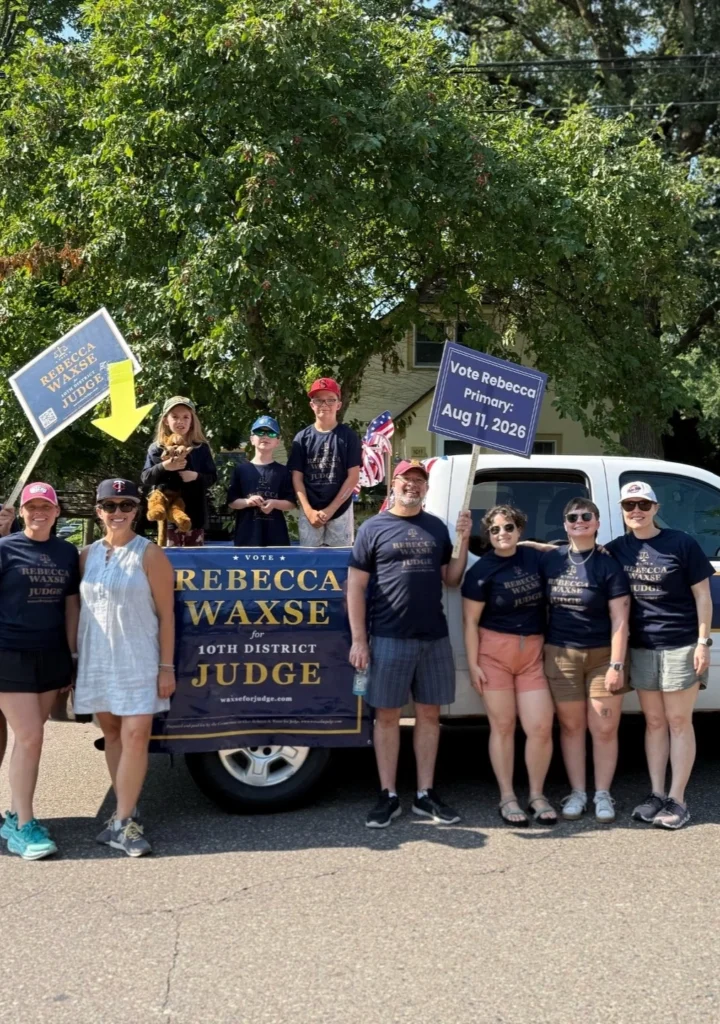
That support means a great deal to me. These are attorneys who regularly see my work from the other side of the courtroom. They know how I prepare, how I litigate, and how I conduct myself professionally. I consider their willingness to support my candidacy to be a tremendous compliment, particularly because several of those supporters previously worked with or supervised my opponent.
Our experience also differs significantly in its breadth.
Since leaving the Washington County Attorney’s Office, my opponent has worked for Tubman, a nonprofit organization that provides legal representation and other services to individuals and families affected by domestic violence. Tubman does important work for people during times of crisis and is a positive force in our community.
That legal practice, however, is focused on a much narrower area of the law. Tubman provides legal services in Washington, Ramsey, and Hennepin Counties. Ramsey and Hennepin Counties are outside the Tenth Judicial District, meaning much of that work occurs outside the district in which we are seeking to serve as judge.
A significant part of Tubman’s legal work involves Orders for Protection, or OFPs. OFPs are important cases, and I have litigated dozens of them during my career. But they represent only one part of the much broader district court practice I have developed over 20 years. My experience also includes criminal cases at every severity level, family law, custody disputes, juvenile matters, child protection, HROs, and other contested district court proceedings.
Tubman also provides family-law representation to qualifying clients. I do not know the extent to which my opponent personally handles those cases, so I cannot compare our experience in that area case-for-case. What I can say is that family law has been a substantial part of my private practice, including divorce, custody, parenting-time, and other contested family matters.
Ultimately, voters will decide what experience they believe is most important in their next district court judge. I encourage voters to look carefully at both of our professional backgrounds.
What I can tell you is what I would bring to the bench
20 years of legal experience, extensive courtroom and trial experience, a broad district court practice, and years of experience handling the difficult and varied matters that Minnesota district court judges are called upon to decide every day.
I hope this information gives you a better understanding of my judicial philosophy, the experience I would bring to the bench, and why I believe I am the more qualified candidate for this position.
Most importantly, I hope I have earned your confidence and your vote for Tenth Judicial District Court Judge this November.